2026-11-10 · Carlos Mendoza
Factors That Influence Water Damage Repair Costs Near Fontana
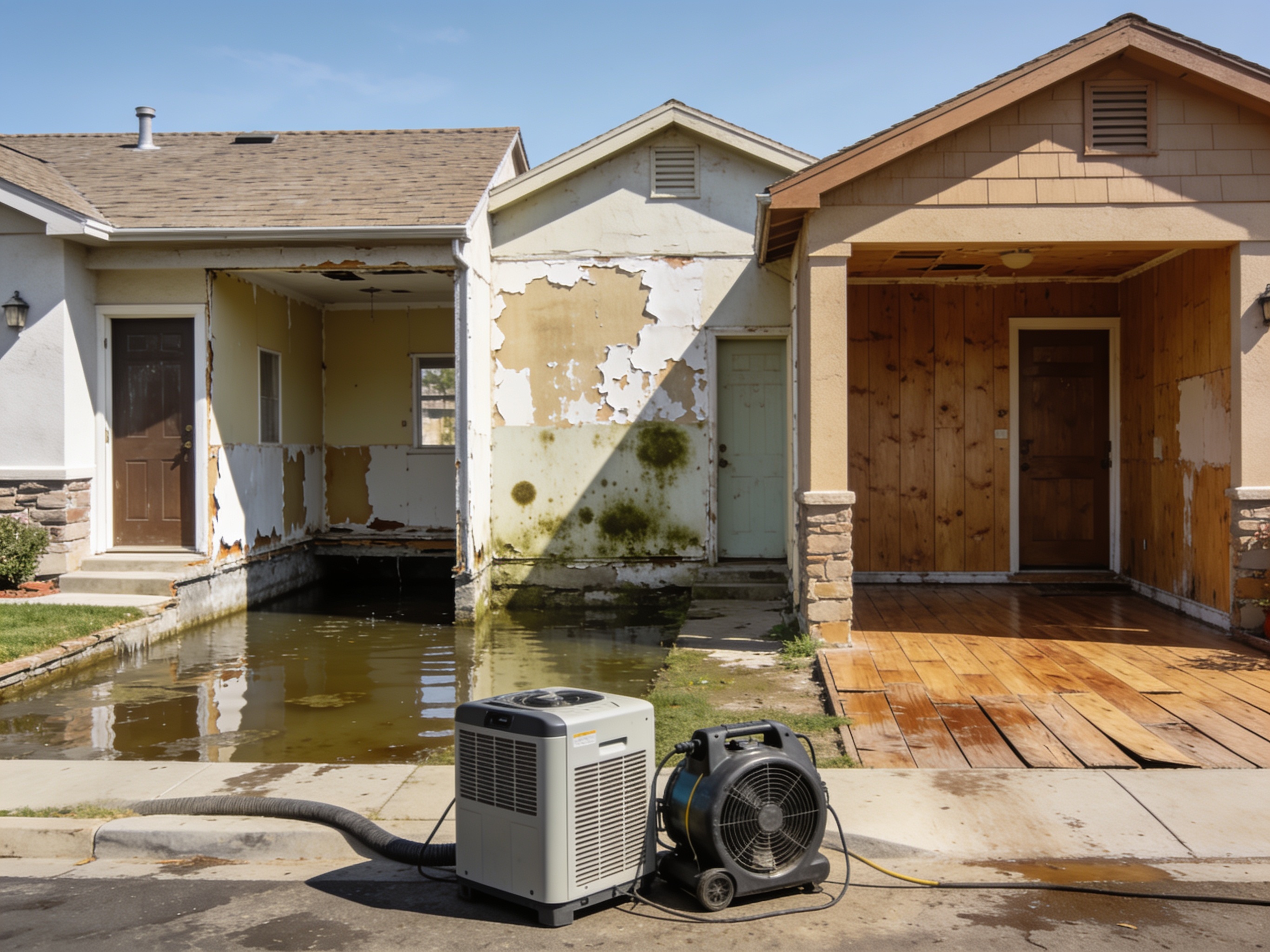
Water damage repair costs near Fontana are shaped primarily by the scope of affected materials, the category of water involved, the age and layout of the home, and how quickly crews can access the site during the area's hot-summer Mediterranean climate. These elements combine differently in each neighborhood, from older stock near Fontana City Hall to newer builds closer to the Auto Club Speedway.
Extent of Affected Materials and Structural Intrusion
The volume of drywall, flooring, and insulation that must be removed sets the baseline for every job. When water reaches subfloors or wall cavities in South Fontana ranch homes built in the 1960s, crews often open larger sections than in slab-on-grade properties in North Fontana. Hidden saturation behind cabinets or under vanities adds labor hours because technicians must trace moisture with meters rather than relying on visible stains alone. In San Bernardino County, where many homes sit on expansive soils, even modest leaks can shift foundations slightly and create additional cracks that require monitoring after drying. Property owners who call during the first 24 hours usually limit the square footage involved, keeping the overall scope smaller than jobs discovered after a weekend away.
Category of Water and Required Safety Protocols
Clean water from a supply line break costs less to handle than water that has contacted sewage or has stood long enough to grow bacteria. Category 3 situations appear more often after heavy winter rains in older Downtown Fontana properties where clay sewer lines have cracked. Technicians must wear full PPE, set up containment barriers, and dispose of contaminated materials at approved landfills, all of which increase time on site. Even Category 2 gray water from washing machines demands antimicrobial treatment and often requires removal of baseboards and toe-kicks to prevent hidden mold growth. Homeowners who attempt DIY cleanup before professionals arrive frequently turn a lower-category loss into a higher-cost project by spreading moisture into adjacent rooms.
Local Climate Patterns and Seasonal Timing
Fontana's hot-summer Mediterranean climate means rapid evaporation in summer months can mask ongoing moisture behind walls, while winter rains push more water into crawl spaces and garages. Jobs scheduled during peak summer heat often finish drying faster, yet the same heat can warp hardwood floors if extraction is delayed. Crews serving nearby Rancho Cucamonga and Rialto see similar patterns, but Fontana's slightly higher elevation and wind exposure sometimes speeds surface drying while leaving deeper pockets untouched. Scheduling around these seasonal shifts helps control overtime charges and equipment rental days.
Property Age, Construction, and Neighborhood Access
Homes built before 1980 near Fontana City Hall commonly contain plaster walls and knob-and-tube wiring that demand slower, more careful demolition. Newer tracts closer to the Auto Club Speedway use engineered lumber and open floor plans that allow faster material removal. Narrow driveways in South Fontana limit the size of drying equipment that can be staged inside, while larger lots in North Fontana permit trailer-mounted units. Technicians familiar with San Bernardino County permitting requirements also know which neighborhoods require extra documentation when structural members are exposed. For deeper guidance on spotting issues before they spread, see How To Check For Hidden Leaks In Older Fontana Properties and review Water Damage Repair details that match local housing stock.