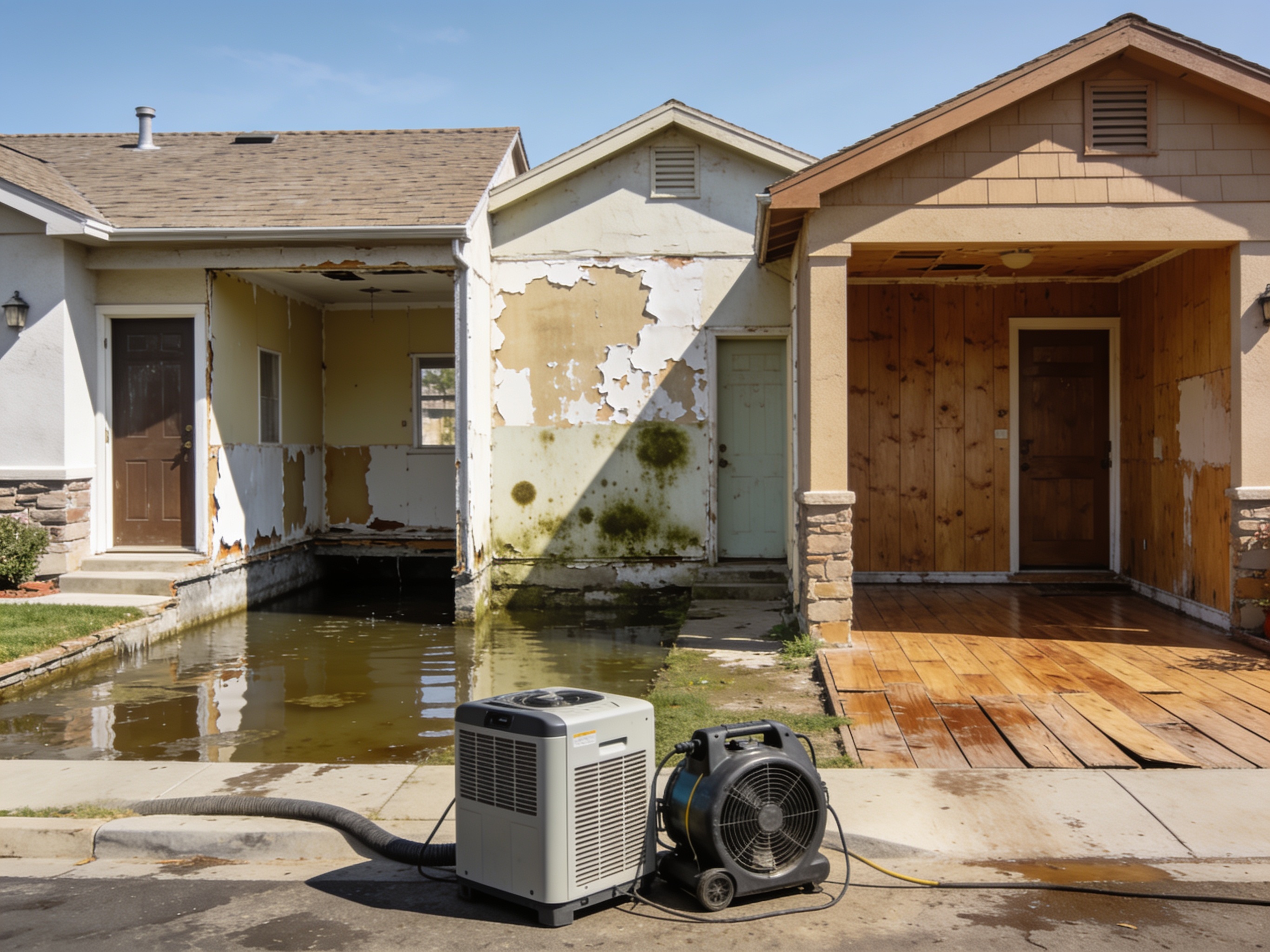
Bloomington sits in the southwestern part of Fontana with many homes built in the 1950s and 1960s along streets like Bloomington Avenue and Cedar Avenue. These older single-family properties often have galvanized plumbing that corrodes over time, leading to sudden leaks behind walls or under slabs. Our crew at 9030 Sierra Ave # D responds directly to calls from this ZIP, extracting water before it reaches the concrete foundations common here.
Winter rains in the hot-summer Mediterranean climate hit flat lots in Bloomington hard, especially near Valley Boulevard where drainage flows slowly toward the freeway corridor. Summer heat expands older pipes, creating new cracks that surface after the first storms. We stage equipment on site within hours, drying subfloors in tract homes that sit close together with limited side-yard access.
Serving Bloomington means working around the I-10 and rail lines that divide the neighborhood, so we keep routes clear for quick returns to South Fontana jobs. Homeowners near Bloomington High School and Randall Pepper Elementary see the same moisture patterns year after year, and our process focuses on those repeat problem areas without unnecessary demolition.
Around 3. Bloomington
We regularly work near:
- 📍Bloomington High School
- 📍Randall Pepper Elementary School
- 📍Bloomington Park
- 📍Valley Boulevard
- 📍Cedar Avenue
- 📍Bloomington Avenue
Water Damage Restoration in 3. Bloomington — Local Notes
- •1950s-1960s tract homes on Bloomington Avenue frequently have slab leaks from aged copper or galvanized lines that require targeted detection before full floor removal.
- •Flat grades near Cedar Avenue and the railroad tracks allow winter runoff to pool against foundations, so we place extra dehumidifiers along perimeter walls.
- •Limited driveway space in many Bloomington blocks means our vans stage on the street while we carry extraction tools through side gates to reach backyard additions.
- •Hot summer expansion followed by sudden rains stresses joints in homes near Valley Boulevard, creating hidden leaks we trace with moisture meters before mold sets in.