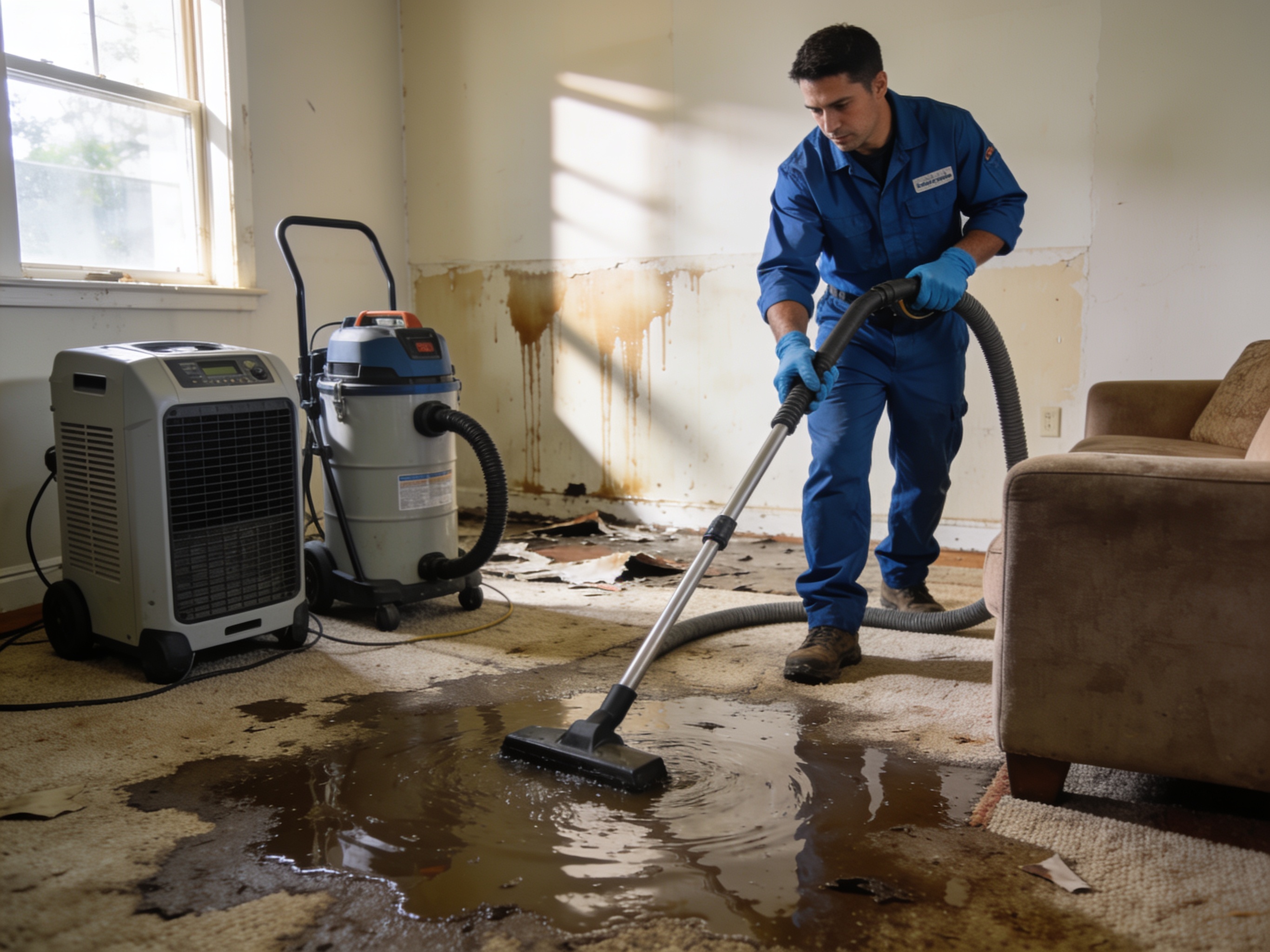
Fontana homes in Downtown and South Fontana often feature older wood-frame construction and slab foundations that trap moisture after leaks from aging pipes or heavy seasonal rains. Once water enters walls or under flooring, the hot-summer Mediterranean climate accelerates mold growth within 48 hours, especially during summer months when temperatures climb quickly. Technicians must pull baseboards, use moisture meters on drywall, and run industrial dehumidifiers sized for the square footage to prevent hidden damage that later shows up as warped floors or musty odors.
Properties near Auto Club Speedway and in North Fontana sit on flatter terrain with clay-heavy soils that drain slowly after storms, so surface water can back up against foundations and enter crawl spaces. Restoration crews frequently deal with sewage backups from overloaded municipal lines in Rancho Cucamonga and Rialto overflow situations that reach Fontana streets. Proper containment, negative air machines, and disposal of contaminated materials are required to meet San Bernardino County health guidelines.
After extraction, drying times vary by material: carpet pad is usually removed and replaced, while hardwood in older homes needs targeted drying to avoid cupping. Technicians document every step with photos for insurance adjusters and return for follow-up readings before any reconstruction begins. Homeowners in Rialto and San Bernardino who skip professional drying often face recurring issues when summer heat pushes remaining moisture back into living spaces.
Technician insight
In Fontana the thing that catches most people out with water damage restoration is how fast mold sets in during the hot-summer months, especially in South Fontana homes built before the 1980s where slab edges and stucco let moisture travel behind baseboards. Homeowners often stop at visible water and miss the clay soil that holds moisture against foundations near the Auto Club Speedway, so we always check crawl spaces even when the living room looks dry.
South Fontana Slab Leak
A kitchen supply line failed in a 1970s home in South Fontana and water traveled under the slab into the living room. We extracted standing water, mapped moisture through the tile, and ran drying equipment for four days until readings stabilized. New baseboards and a small section of drywall were replaced before the homeowners moved furniture back.
Water Damage Restoration Service Services We Offer
✓Emergency Water Extraction
Rapid removal of standing water from basements and slabs in Downtown Fontana homes to stop further saturation of framing and flooring.
✓Structural Drying Services
Placement of air movers and dehumidifiers sized for older wood-frame houses in South Fontana to bring moisture levels back to safe readings.
✓Mold Prevention After Water Damage
Antimicrobial treatment and moisture mapping in North Fontana properties where hot summers speed mold growth behind walls and under cabinets.
✓Carpet and Flooring Restoration
Removal of saturated pad and targeted drying of hardwood or laminate in homes near Fontana City Hall to prevent warping and odors.
✓Drywall and Insulation Replacement
Cut-out and replacement of water-affected drywall in San Bernardino County residences while preserving original textures and finishes.
✓Sewage Cleanup and Restoration
Safe removal and disinfection of contaminated water from municipal backups that reach properties near the Auto Club Speedway.
Water Damage Restoration Service Cost in Fontana, CA
| Service | Typical Range | What Affects It |
|---|---|---|
| Initial Assessment And Extraction | $350–$850 | Higher when sewage or large volumes are present in slab homes. |
| Structural Drying (Per Day) | $250–$600 | Varies with number of rooms and summer heat load. |
| Drywall Removal And Replacement | $400–$1,200 | Depends on linear feet and access in older Fontana construction. |
| Carpet Pad Removal And Disposal | $150–$400 | Lower for small areas, higher when subfloor drying is also required. |
Ranges are typical for Fontana, CA and confirmed with an exact written quote before any work starts.
How it works
- 1
On-Site Assessment
Technician inspects all affected rooms, uses moisture meters on walls and floors, and notes construction type common to the neighborhood.
- 2
Water Extraction
Portable pumps and vacuums remove standing water from slabs and crawl spaces before humidity rises further in the local climate.
- 3
Drying And Monitoring
Equipment runs until readings drop below 15 percent; daily visits confirm progress in hot summer conditions.
- 4
Final Restoration
Replacement of removed materials and verification that no hidden moisture remains before homeowners return.
Pricing
Cost depends on square footage affected, water category, and drying time required; estimates provided during listed business hours.